Second edition of "Business Models and Investments for Nature" launched
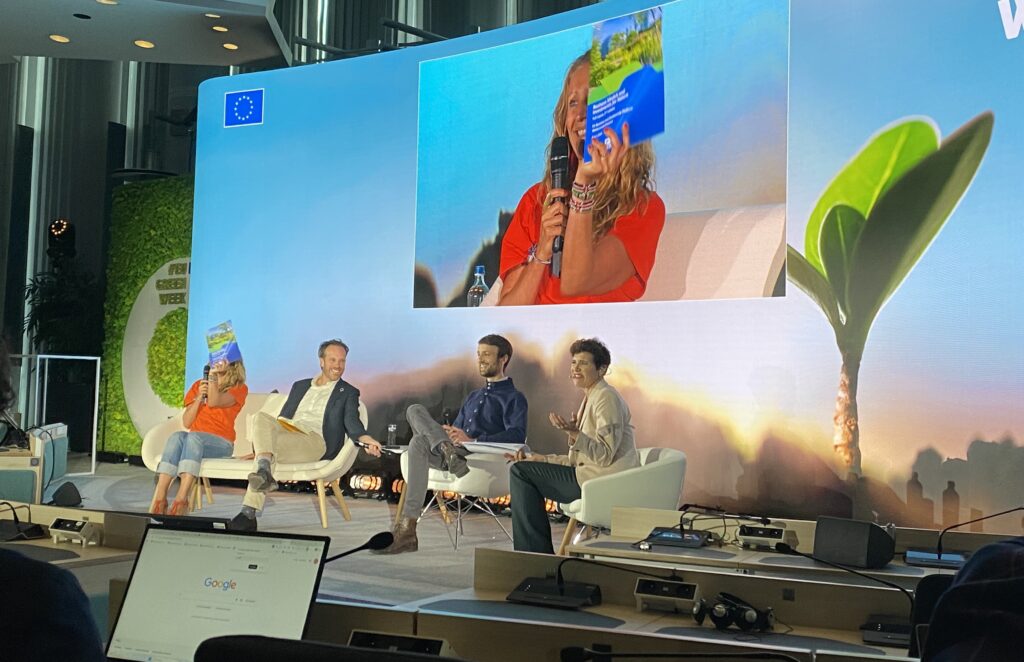
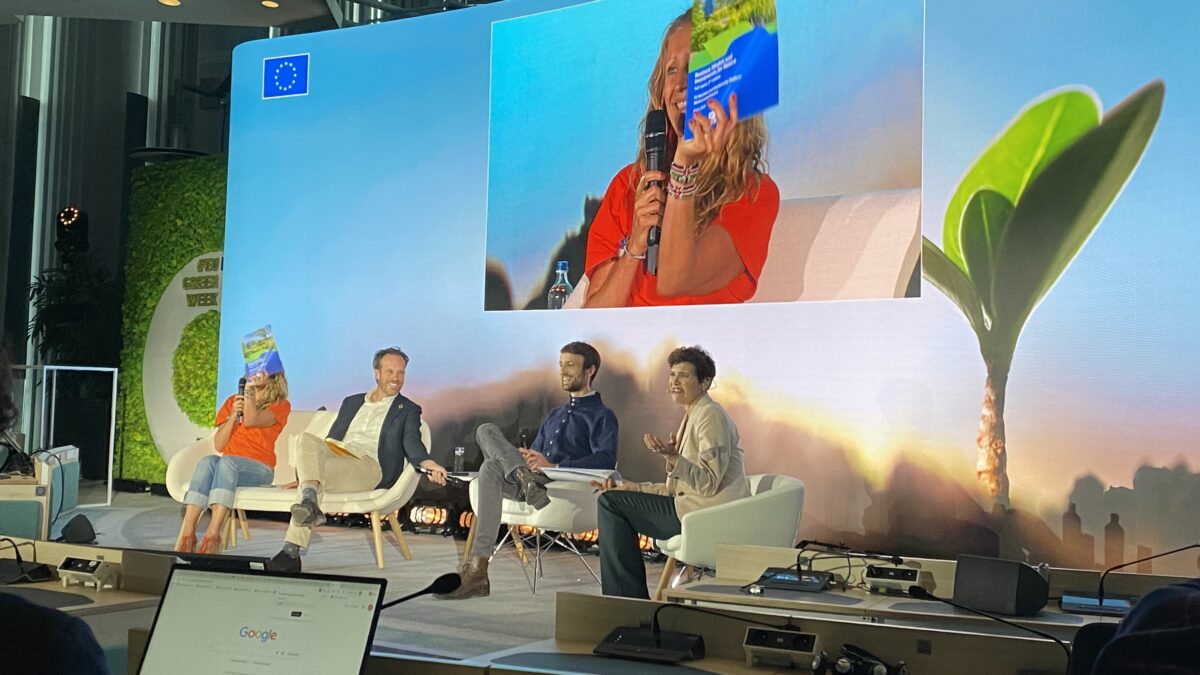
The second edition of the report*Business Models and Investments for Nature* was presented during EU Green Week on June 4. The report provides organizations, investors, and policymakers with concrete examples of ten European best practices for financing nature restoration and biodiversity. Through these concrete examples, the report demonstrates that investing in nature not only pays off for a sustainable future but also generates economic benefits.
Investing in a nature-positive economy
With Investing in a nature-positive economy as the central theme of EU Green Week 2026, the report aligned well with the annual European event. During the launch panel, three prominent members of the EU Business & Biodiversity Platform who contributed to the report shared their perspectives on the opportunities and challenges surrounding financing and investing in nature.
Real-world examples show that investments in nature are profitable
Marguerite Culot-Horth (Groupe CDC) describes the report as “a goldmine of practical examples.” In her view, the publication offers exactly what many organizations need: concrete examples of how investments in nature and biodiversity are put into practice.
According to Marguerite, the report helps organizations that want to contribute to nature restoration but are still looking for a concrete approach. By making existing initiatives, lessons learned, and successful case studies accessible, it offers valuable inspiration for companies, investors, and policymakers who want to work toward a nature-positive economy. At the same time, the report underscores that nature restoration is not only an ecological challenge but also a prerequisite for sustainable prosperity and long-term economic resilience.
Concrete steps to channel more capital toward nature
Hadrien Gaudin-Hamama (Mirova) also emphasized the importance of taking action during the meeting. One of the report’s key findings is that Europe has sufficient knowledge and opportunities to scale up nature restoration, but that this requires clear investment pathways. The report demonstrates how investors, businesses, governments, and civil society organizations can jointly mobilize capital for nature projects.
During EU Green Week, attention was also focused on innovative solutions for ecosystem restoration, including the use of 3D-printed artificial reefs. According to Hadrien, such examples underscore how technology and innovation can play a key role in accelerating nature restoration in Europe. He also praised initiatives that connect investors with innovative nature projects, as these help narrow the biodiversity financing gap.
Not a funding gap, but a direction gap
During his presentation, Hein Brekelmans (Triodos Bank) offered an important perspective on the discussion surrounding nature investments. In his view, the biggest challenge lies not so much in the lack of available financial resources, but in the way capital is currently being deployed. The real opportunity lies in shifting investments away from activities that harm nature and toward initiatives that promote nature restoration and biodiversity.
This approach is closely aligned with the report’s findings. To achieve the transition to a nature-inclusive economy, not only is additional funding needed, but above all a reorientation of existing investment flows. By deploying capital more consciously, companies and financial institutions can play a key role in restoring ecosystems and strengthening economic resilience.
Practical tips for tomorrow’s leaders
In light of Europe’s ambitions regarding biodiversity and climate change, the report offers concrete and immediately actionable solutions for organizations that wish to take a leading role in further strengthening collaboration between financial institutions, businesses, and conservation organizations. The goal is to accelerate the transition to a nature-positive economy.
The report was compiled by NextGreen colleagues Anne-Marie Bor and Martha Bettina Bailon based on input from a subgroup of the EU Finance & Biodiversity Community. This financial sector community is part of the European Business & Biodiversity Platform, which was launched by the European Commission.
Nature Restoration on Industrial Parks
Anne-Marie and Martha are eagerly looking forward to the continued development of the EU Finance and Biodiversity Community, which in 2026 will focus on enhancing biodiversity on industrial sites in line with the Nature Restoration Regulation.