Expedition: biodiverse terrain strengthens social innovation
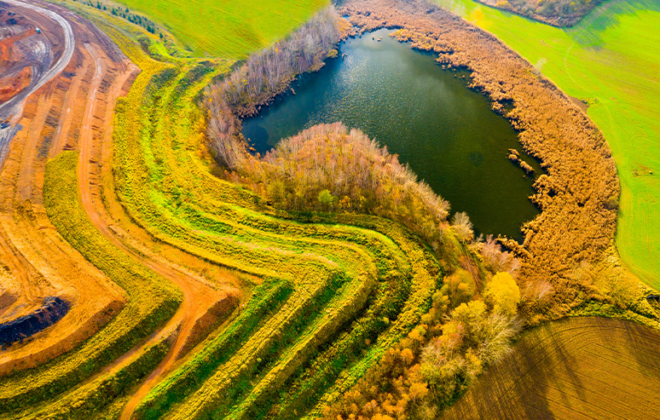
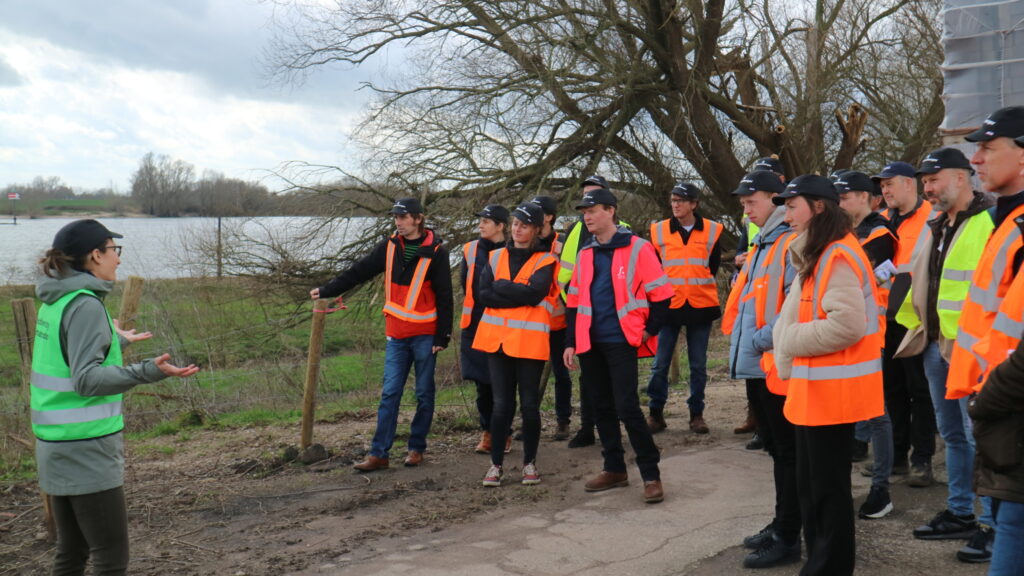
On an expedition to the Wienerberger brick factory, participants in the Adaptation Allience saw how joint monitoring of species on site further increases employee engagement. At this first live meeting on March 23, the group then learned how 'organizational capacity' can increase biodiversity at the Medel business park in Tiel. In the afternoon, the participants identified the stakeholders and worked on a step-by-step plan for greening.
Biodiversity Ambassador Program
The biodiversity policy of Wienerberger, a company that produces building materials, aims to make all 200 production sites in Europe climate-adaptive and nature-inclusive. There are various drivers for Wienerberger's biodiversity policy, including intrinsic motivation, market demand, and legislation. The company has also set up a biodiversity ambassador program, which is very popular with employees. Employees who participate in this program use their knowledge of birds, bees, or other species to monitor them around the company. In doing so, employees start to look at the site differently, which has led to a plan to create a comfortable and green lunch area on the site. "Social innovation is the greatest innovation. Working together on biodiversity generates a lot of energy and connection," said Mark van Loon, Senior Vice President & Innovation at Wienerberger AG. "Municipalities can stimulate biodiversity on company plots by contributing ideas during the licensing process, ensuring different mowing policies on the boundaries with private plots, and organizing group purchasing," added Rena de Mey, Project Manager Biodiversity, Wienerberger AG.

Co-create
An important lesson learned from this day was that social innovation is the most important innovation. Companies can unleash a lot of energy by co-creating with employees and by making plans with them to green the site. This also has positive effects on employee engagement.

About the Adaptation Allience
In the summer of 2022, we launched the Adaptation Allience together with the municipalities of Enschede, Harderwijk, Uitgeest, and Antwerp because we can take faster steps toward climate adaptation and biodiversity when we work together. Our first working group is focusing on business parks. In the coming period, working groups will be launched for housing associations and homeowners.
Within the Adaptation Allience, stakeholders come together to develop steps as they go along. This means that, in addition to municipalities, water boards, and provinces, we also involve private owners. We are also in contact with financial institutions. They have entrepreneurs and homeowners as customers and are looking for ways to facilitate climate adaptation. Within the Adaptation Allience, parties work together to find solutions that make it possible and attractive for business parks, entrepreneurs, and homeowners to take climate adaptation measures while simultaneously strengthening biodiversity.